2023/03/12

名和晃平 Kohei Nawa / White code #35


                                                                  Photo by Toshihiko Murakami
Kohei Nawa / White code #35

本作は、白い絵具の雫が滴下する動きを、水平に置かれた麻布をゆっくりと(約秒速1 cm)移動させながら受け止めることで制作されています。作家は絵具の粘度、滴下孔の大きさ、布の移動速度といった条件を精密に調整し、雫が粒として線上に並び、ときに途切れ、ときに結びつきながら定着していく過程を利用しています。筆致や身体的な動作によって描くのではなく、素材の特性と物理的パラメータを制御することで画面を構成している点に、本作の特徴があります。

「White code #35」は、降り積もる雪を思わせる一方で、プログラムコードのような規則性も感じさせ、アナログとデジタルの中間領域に位置する表現として見ることができます。素材の挙動を丁寧にコントロールすることで生まれるその線は、情報社会のリズムや構造を反映した、現代的な印象を強く与えます。


この作品を初めて拝見した際、Agnes Martin の《The Islands》が想起されました。Martin の作品では、薄い土色のキャンバスに手描きのグリッドが引かれ、小さな白い四角が一つひとつ規則正しく塗りつぶされています。その画面からは、人の手によって築かれた秩序や、清潔で静謐な精神性が感じられます。

同じく土色と白というミニマルな色調を持ちながら、「White code #35」から伝わってくる感覚は大きく異なります。Martin が示した手技と規律の世界に対して、本作はデジタル社会固有の構造や情報の流動性を視覚化しています。両者を比較すると、作家が生きた時代や環境の違いが、作品に宿る感受性に明確な差異を生み出していることがよくわかります。

"White code #35" is an abstract painting created using a technique where drops of white paint are caught on horizontally moving linen fabric, arranged in a linear pattern, and fixed in place by connecting or interrupting them, all while controlling the viscosity of the paint, the size of the holes through which the paint flows, and the speed at which the fabric is moved. The artist did not use their body to create the painting but rather controlled the paint's viscosity, the size of the holes through which the paint flows, and the speed at which the fabric is moved.

"White code #35" resembles both snow falling on the earth and programming code, occupying an intermediate space between analog and digital art forms.

When I first saw this artwork, it reminded me of Agnes Martin's "The Islands". That work features a small arrangement of white squares on a background of earthy brown, created by painting the canvas a light brown color, drawing a grid in pencil by hand, and filling in the grid squares with white paint in a regular pattern.

Agnes Martin's canvases evoke a sense of order created by human hands, conveying a clean, pure, and Zen-like faith. In contrast, "White code #35" reflects the digital society of the 21st century and exudes a very contemporary atmosphere. While these works give off a minimal, clean impression of brown and white, they are strongly influenced by the era and environment in which the artist lived, giving a different sense altogether.


2022/12/20

中谷芙二子


Diller and Scofidio は、霧を建築材に使った画期的な建築を設計したが、中谷芙二子は世界で初めて霧を材料に彫刻を創ったアーティストである。1970年の大阪エキスポで初めて「霧の彫刻」を発表し、以後、霧を素材に世界各地に80以上の霧の彫刻を設営した。

彫刻の歴史において、石やブロンズのようなソリッドなマテリアルを用い、安定した形で静止させることが彫刻として成立させるための大前提だった時代が長く続いた。

この前提に風穴を開けたのがアレクサンダー・カルダー。1930年代、カルダーは、風になびき形が変容する画期的な彫刻を発明した。ただ、カルダーの彫刻にはまだ重心があり、重心の位置が変わることはない。彫刻に付きまとう固定した重心からは逃れられなかった。

中谷は、彫刻に無くてはならないと考えられていた重心を無くしてしまった。それだけではない、外から鑑賞するだけではなく、中に入って鑑賞する彫刻を創造した。空中に揺れる自然のベール越し観る景色は常に変化し止まることなく振動している。

かつて、レオナルド・ダヴィンチが、遠くにあるものをぼかして表現することによって空気の質感を描こうとしたが、中谷は自然のベールであたりをぼかし、彫刻においてスフマート技法を再現したのである。


Diller and Scofidio used fog as a building material to create innovative architecture. On the other hand, Fujiko Nakaya was the first artist to use fog as a material for sculptures, showcasing her "Fog Sculptures" for the first time at the Osaka Expo in 1970. She has since installed over 80 fog sculptures in various locations around the world.

Alexander Calder revolutionized the traditional idea of sculptures needing to have a solid material like stone or bronze with a stable form. In the 1930s, Calder invented sculptures that change shape in response to wind. However, Calder's sculptures still had a center of gravity that remained unchanged.

Fujiko went a step further by eliminating the need for a fixed center of gravity in sculptures. Her sculptures not only allow for viewing from the outside, but also allow for viewing from the inside, surrounded by the constantly changing and vibrating natural veil of fog.

Just as Leonardo da Vinci tried to depict the quality of air by blurring objects in the distance, Fujiko used the natural veil of fog to blur the surroundings and recreate a sfumato effect in her sculptures.

2022/11/24

Blur Building


Diller and Scofidio 設計の Blur Building(霧の建物) は、スイスの西部にあるヌーシャテル湖の南に建てられた2002年スイス・エキスポのためのパビリオンである。その名の通り、建物を覆う外部との境界線は霧でできている。霧なので、天候に大きな影響を受ける。風が吹くと流される。気温の変化で上下に動く。

まるで雲のような建物であるが、中に入ると視界不良のため視覚以外の匂いや音に感覚を集中させ手探りで、恐る恐る前に進むことになる。そこは、慣れ親しんだ高解像度のデジタル映像とは真逆の低解像度の世界である。

アバターが高解像度のバーチャル空間で生活するというメタ社会の実現も間近にあるが、雲の中の低解像度の現実は社会の進歩とは逆行する世界。


随分昔であるが、インドのタージマハールで忘れがたい経験をした。タージマハールはインドの王が若くして亡くなった妻のために建てた墓(廟)であり、対岸のアグラ城から美しいタージマハール望み今は亡き妻への想いをはせたと言う。私はアグラ城から、青く晴れた空の下、輪郭がくっきりとしたタージマハールを眺めていた。ところが見る見るうちに空がどんよりとして暗くなり雨が降り出した。あたりに霧が立ち込め、タージマハールのその美しい姿はおぼろげになり濃い霧の中に消えてしまった。

遥々、インドまでタージマハールを観るために来たというのに、と悔しい気持ちでいると、やがて霧は薄らぎ始め陽光とともに再び白くくっきりとした優美な姿を取り戻したのだった。この夢のような体験は時間にしてたった10分程度。

霧は高解像度の世界を一変させる自然のベールであるが、時に我々の脳をも詩的に刺激するアーティスティックな建築材(メディア)なのである。

The Blur Building designed by Diller and Scofidio is a pavilion built for the 2002 Swiss Expo in Nussloch Lake in Western Switzerland. As its name implies, the building is surrounded by a mist that blurs the boundary between the exterior and interior of the building. 

The mist is affected by the weather and can move with changes in wind and temperature. Inside the building, with limited visibility, the experience is focused on sensory stimuli other than sight, such as sound and smell, as visitors move forward cautiously. This low-resolution world contrasts with the high-resolution digital images that we are familiar with. 

The realization of a metasocial reality where avatars live in high-resolution virtual spaces is imminent, but the low-resolution reality within the mist runs counter to the progress of society. The experience of the Blur Building is a reminder of how the natural veil of mist can transform the high-resolution world and stimulate our brains artistically.

I once had a memorable experience in Taj Mahal, India. Taj Mahal is a tomb built by an Indian king for his beloved wife who passed away at a young age. From the opposite bank of the river, I was admiring the Taj Mahal with its beautiful outlines, reflecting the king's memories of his late wife. However, soon the sky turned cloudy and it started raining. The surroundings were enveloped in a thick mist, and the beauty of the Taj Mahal faded into the darkness, becoming barely visible. 

Despite coming all the way to India to see the Taj Mahal, I was filled with regret. But, eventually, the mist started to clear, and the Taj Mahal regained its white and beautiful appearance, shining under the sunlight. The whole experience, like a dream, lasted only about 10 minutes. The mist is a natural veil that can change the high-resolution world and sometimes, it stimulates our brains poetically and becomes an artistic medium for building and construction.

2022/09/04

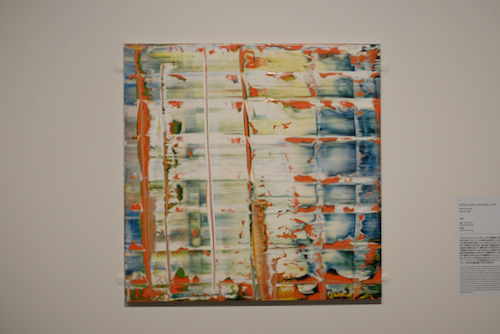
Gerhard Richter

この電波が乱れたモニターの映像のようなAbstract Painting は、どのようにして製作されたのでしょうか?
ゲルハルト・リヒターは、キャンバスに複数の絵の具をたっぷりとベタ塗りし、まだ乾かぬうちに、スキージ(へら)と呼ばれる手作りの道具をキャンバスの表面を滑らせます。スキージにより、削り取られ、引き伸ばされ、混ざり合った絵の具から得られるイメージは予測不能。 あらかじめ狙った完成形のイメージに近づけるという従来の手法ではなく、引っ掻いてみなければ分からない偶然性に支配され、絵画として成立するまで、反復し制作を進めていきます。
ジャクソン・ポロックがドリップ・ペインティングという手法を用いて、抽象絵画に偶然性と身体性の要素を取り入れ再現不可能な絵画を創出したのと同様に、実験的な制作を繰り返し偶発的に生まれた傑作がこの作品。リヒターの抽象画作品の中でも際立った一作となっています。

How was this Abstract Painting that looks like a distorted monitor image produced? Gerhard Richter applies several colors of paint generously and thickly on canvas, then, while still wet, uses a handmade tool called a squeegee to scrape the surface of the canvas. The image obtained from the scraped, stretched, and mixed paint is unpredictable. Rather than using traditional techniques to approach a preconceived final image, Richter is governed by the element of chance that can only be revealed by scratching and repeating the production process until the painting is completed.

Similar to Jackson Pollock, who used the drip painting technique to incorporate chance and physical elements into abstract paintings and create irreproducible works of art, this piece is the result of experimental production and accidental brilliance. It is one of Richter's masterpieces of abstract painting. 

2022/07/08

Lucian Freud (2)


ハンサムで魅力的だったフロイドは多くの女性と出会い、彼女たちとの間に30人もの子供がいたと言われています。(認知したのは14人)

フロイドが描くのは、実の子供たちや愛人、友人たちなど、彼が興味を持つ、ごく近しい人々。作業はゆっくりしていて、ものすごく時間をかけて細部を観察して描きました。絵画の歴史において、女性の肖像画は欠点を補うように若く描くのが常でしたが、フロイドはあえて醜く描きました。画家の執拗な観察により微細な欠点も白日の下に晒されたモデルは実際よりも老けて見えました。モデルたちは、しばしば「なぜルシアンは私を醜く描くのだろう」と戸惑ったといいます。

フロイドの祖父は、精神分析を創始したジーグムント・フロイト。祖父がベッドやソファーに患者を座らせて本人が明かそうとしない事実を引き出したように、ルシアンもベットやソファーにモデルを座らせて内面から滲み出る外観の特徴を微細に観察しリアルに表現しました。


この後ろ向きで横たわる女性はフロイドの実の娘アナベル(Annabel)。

まるで冬眠に入った動物のように深い眠り落ちている後ろ姿は、痛々しく精神的な救いを求めているように見えます。閉ざされた彼女の内面は、丸い背中をおおう青いガウンのしわの陰影に見事に表現されています。

唯一あらわなゴツゴツした男のような「足の裏」は、彼女の内面から露出した異物のようです。

フロイドは、しばしば脇役(手や足)を主役(顔)のように描き、脇役に圧倒的な存在感を持たせましたが、この絵は主役が不在で足の裏が主役の代わりを演じます。

絵画の中のヒエラルキー(主役、脇役等)を壊す非常識も彼の専売特許です。

Lucian Freud, who was handsome and charismatic, is said to have had encounters with many women, and it's believed that he fathered as many as 30 children (though he officially recognized 14 of them).

The subjects of Freud's paintings were often those closest to him: his own children, lovers, friends, and anyone who piqued his interest. His working style was slow, taking an immense amount of time to observe details meticulously. Historically in art, portraits of women were often painted to make them look younger and hide their flaws. However, Freud deliberately painted them in an unflattering manner. Due to the artist's relentless observation, the models often appeared older, with every minor flaw illuminated. It was often said by the models, "Why does Lucian paint me so unattractively?"

Lucian Freud's grandfather was the founder of psychoanalysis, Sigmund Freud. Just as Sigmund made his patients sit on a bed or couch to delve into truths they were reluctant to reveal, Lucian also placed his models on beds or sofas, keenly observing and depicting the outward characteristics stemming from their inner selves.

The woman lying on her back in this painting is Freud's biological daughter, Annabel. Her reclining figure, seemingly in a deep, hibernation-like sleep, looks as if she is in pain and seeking psychological relief. Her closed-off inner world is brilliantly expressed in the shadows of the blue gown covering her rounded back. The only exposed part of her - the rough, almost masculine soles of her feet - appear as foreign objects revealing her inner self.

Freud often painted what might be considered secondary features, like hands or feet, with as much importance as primary ones, like the face. In this painting, with no evident main subject, the soles of the feet take center stage.

Breaking the conventional hierarchy in art, where certain elements take precedence over others, was a hallmark of Freud's style.